Every organisation shares the same frustration.
They know where they want to go, but something keeps pulling them back. The reason isn't usually a lack of strategy, and rarely a shortage of smart people. The thing pulling them back is gravity: the accumulated weight of complexity that builds up over years. Initiatives that don't connect. Interpretations that conflict. Decisions made so long ago that nobody remembers why.
Traditional responses make it worse. More governance, more frameworks, more documentation. The organisation gets heavier, not lighter.
I take a different approach.
I help leaders see their organisation as a system of capabilities: what the business does, how it creates value, what needs to change. This isn't abstract modelling. It's the foundation for every meaningful decision — where to invest, what to stop, how to sequence change, why certain initiatives keep failing.
When strategy connects to objectives, objectives connect to capabilities, and capabilities connect to the work, something shifts. Leaders move from reacting to designing. The "what do you actually mean by capability" debates run out of fuel. Transformation stops being a word people deploy in meetings and becomes something with a number against it.
That's escape velocity.
Three disciplines, integrated.
My work sits at the intersection of three architectural traditions. Most architects specialise in one. I've spent years integrating all three, because real transformation requires all of them working together.
-
Business Architecture
Capability models, value streams, operating model design. The structural foundation that makes everything else possible.
-
Domain-Driven Design
Bounded contexts, strategic classification, the bridge between business language and technical systems. The discipline that prevents architectural drift between business and IT.
-
Dynamic Capabilities
Sensing, seizing, transforming. How organisations learn and adapt. The difference between static blueprints and living systems — and the missing link in most architecture practice.
I don't just advise. I build.
Most architects sell hours. I sell hours plus the platforms that compress them. Every engagement runs on top of tools I've built — not products I market, but instruments that let me deliver the speed and accuracy of a large consulting team on my own.
-
StrategyMapper Pro
A Wardley mapping canvas with built-in agentic strategic analysis — twelve pattern detectors and a Claude-driven phase pipeline grounded against the methodology ontology. macOS-native. Maps that previously took weeks of artefact production now emerge from a working session. See StrategyMapper Pro →
-
Soaring Wings Pro
The engagement-delivery platform. Guided maturity assessments, eleven industry reference libraries, evidence capture, and a hash-chained per-engagement audit ledger — the instrument that turns subjective conversations into structured, traceable findings. See Soaring Wings Pro →
-
Web platforms
Full-stack development with Astro, Next.js, Vercel, and Supabase. Dashboards, assessment tools, and client portals that bring architectural insights to stakeholders everywhere — not just the people in the room.
-
AI-augmented practice
Knowledge graphs, on-device AI, agentic workflows. Not because the technology is fashionable, but because it makes the diagnostic discipline sharper and the analyst layer more reliable.
These aren't products I sell. They're how I work, and why engagements move faster than clients expect.
Soaring Wings is the method.
The methodology has its own home — soaringwings.ai — where the Signal-Response Distance working paper, the Strategic Architecture Playbook, and the Pattern Library are published. SRD names what most architecture frameworks can't see: the distance between a strategic signal arriving and the organisation actually moving.
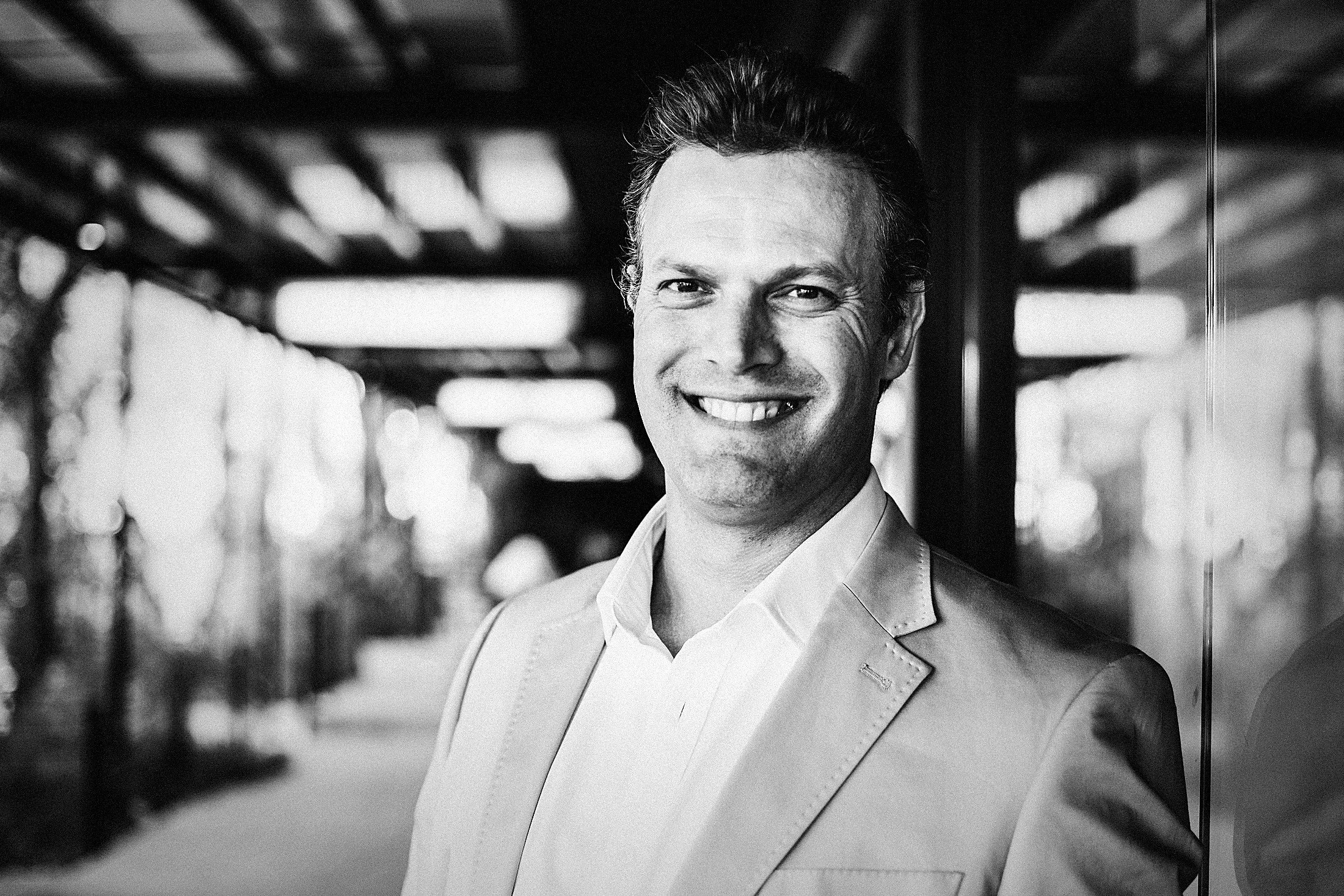
AJ Olivier is the practitioner. Soaring Wings is the method. The platforms are the acceleration engine.
Financial services, deep.
I've spent my career in financial services architecture — banking and insurance, specifically. Claims systems, credit decisioning, underwriting, policy administration, customer journeys. The domains where complexity compounds fastest and the cost of misalignment is highest.
Before consulting, I held solution-architecture, integration, and enterprise-architecture roles inside financial services. I've designed operating models and led platform transformations. I've built microservices architectures from greenfield and inherited them mid-flight. The strategy sessions I've facilitated are in the hundreds, across executive teams that wanted clarity and middle layers that needed to be convinced the clarity was real.
Currently moving into a DBA at the University of Pretoria — Strategic Architecture, with the SRD framework as the dissertation backbone. The engagements become the primary data; the framework becomes the analytical apparatus.
Systems thinker. Story teller.
I think in systems but communicate in stories. I believe the best architecture is invisible — it just makes everything else work. I'm sceptical of frameworks that exist to be impressive rather than useful.
I like building things. Sometimes that's a target operating model. Other weeks it's a Swift app, or a Next.js dashboard, or a new way of thinking about a problem nobody knew they had.
A trusted advisor who builds native apps and writes code.